| Militat omnis amans, et habet sua castra Cupido; Attice, crede mihi, militat omnis amans. quae bello est habilis, Veneri quoque convenit aetas. turpe senex miles, turpe senilis amor. | Every lover serves as a soldier, and Cupid has his camp; Atticus, believe me, every lover is a soldier. That which is suitable for war, that is also suited for Venus. The old soldier is shameful, the aged lover is shameful. |
| quos petiere duces animos in milite forti, 5 hos petit in socio bella puella viro. pervigilant ambo; terra requiescit uterque— ille fores dominae servat, at ille ducis. | The spirits which generals demand in a brave soldier, the same a pretty girl seeks in a male companion. They keep watch together; both rest on the ground--the one serves at the gate of his mistress, the other at that of his general. |
| militis officium longa est via; mitte puellam, strenuus exempto fine sequetur amans. 10 ibit in adversos montes duplicataque nimbo flumina, congestas exteret ille nives, | Long roads are the duty of a soldier; send the girl, the vigorous lover will follow her to the very end. He will journey in adverse mountains and a river doubled by the storm, he will step forth in thickened snow, |
| nec freta pressurus tumidos causabitur Euros aptaque verrendis sidera quaeret aquis. quis nisi vel miles vel amans et frigora noctis 15 et denso mixtas perferet imbre nives? | and, about to press on the swellon seas, he will not make an excuse of Euros and seek stars suitable for sweeping clean the waters. Who excepte either a soldier or a lover endures the frigidity of night and snow mixed with pouring sleet? |
| mittitur infestos alter speculator in hostes; in rivale oculos alter, ut hoste, tenet. ille graves urbes, hic durae limen amicae obsidet; hic portas frangit, at ille fores. 20 | One is sent into enemy houses as a spy; the other holds his eyes on his rival, as an enemy. That man occupies weighty cities, this one the threshhold of a cruel girlfriend; this man breaks down gates, but that man, doors. |
| Saepe soporatos invadere profuit hostes caedere et armata vulgus inerme manu. sic fera Threicii ceciderunt agmina Rhesi, et dominum capti deseruistis equi. | Often it is profitable to invade a sleeping enemy and to slaughter an unarmed crowd with an armed hand. Thus the savage armies of Threician Rhesa fell, and you, captured horses, deserted the master. |
| nempe maritorum somnis utuntur amantes, 25 et sua sopitis hostibus arma movent. custodum transire manus vigilumque catervas militis et miseri semper amantis opus. | Certainly lovers use the sleep of husbands, and move their arms with the enemies sleeping. It is always the work of a soldier and a poor lover to bands of gaurds and swarms of watchmen. |
| Mars dubius nec certa Venus; victique resurgunt, quosque neges umquam posse iacere, cadunt. 30 Ergo desidiam quicumque vocabat amorem, desinat. ingenii est experientis amor. | Mars is doubtful and Venus is not certain; and the conquered rise again, and those whom you might deny were ever able to lie down, they fall. Therefore whoever was calling love idleness, let him stop. Love is of an experimental nature. |
| ardet in abducta Briseide magnus Achilles— dum licet, Argeas frangite, Troes, opes! Hector ab Andromaches conplexibus ibat ad arma, 35 et, galeam capiti quae daret, uxor erat. | Great Achilles burns over the abducted Briseas - while it is permitted, Trojans, break the Argean strength! Hector was leaving to arms from the arms of Andromache, and, she who gave the helmet for his head, was his wife. |
| summa ducum, Atrides, visa Priameide fertur Maenadis effusis obstipuisse comis. Mars quoque deprensus fabrilia vincula sensit; notior in caelo fabula nulla fuit. 40 | The best of generals, Atridea, with Priam's having been seen, is said to have been amazed by her flowing Maedadian locks. And Mars, having been caught, felt the chains of a metal-worker; no story was more well known in heaven. |
| ipse ego segnis eram discinctaque in otia natus; mollierant animos lectus et umbra meos. inpulit ignavum formosae cura puellae iussit et in castris aera merere suis. | I myself was sluggish and born into easygoing leisure; and my shady bed softened my spirits. Care for a pretty girl impelled sluggish me and ordered me to serve for a penny in her camps. |
| inde vides agilem nocturnaque bella gerentem. 45 qui nolet fieri desidiosus, amet! | From that time, you will see me nimble and waging war at night. He who does not wish to become idle, let him love! |
Showing posts with label Ovid. Show all posts
Showing posts with label Ovid. Show all posts
Tuesday, November 29, 2011
Amores 1.9 by Ovid

Monday, November 28, 2011
Amores 1.11 and 1.12 by Ovid
| XI Colligere incertos et in ordine ponere crines docta neque ancillas inter habenda Nape, inque ministeriis furtivae cognita noctis utilis et dandis ingeniosa notis | 11 Learned in collecting and placing in rows the uncertains locks of hair and not to be held among the serving girls, Nape, and proven in the useful ministerings of the furtive night and ingenious at giving notices |
| saepe venire ad me dubitantem hortata Corinnam, 5 saepe laboranti fida reperta mihi— accipe et ad dominam peraratas mane tabellas perfer et obstantes sedula pelle moras! | Often exhorting the doubting Corinna to come to me, often having been found faithful to me, laboring--accept and carry to your mistress these inscribed tablets this morning and carefully banish any delays in the way ! |
| nec silicum venae nec durum in pectore ferrum, nec tibi simplicitas ordine maior adest. 10 credibile est et te sensisse Cupidinis arcus— in me militiae signa tuere tuae! | There is not harsh iron nor veins of stone in your heart, nor is there for you simplicity greater than your place. It is believable that you also have felt the bow of Cupid -- protect the banners of your fight in me! |
| si quaeret quid agam, spe noctis vivere dices; cetera fert blanda cera notata manu. Dum loquor, hora fugit. vacuae bene redde tabellas, 15 verum continuo fac tamen illa legat. | If she seeks what I am doing, you will say that I live by hope for the night; the notated wax carries the rest in my pretty hand. While I speak, the hour flies. Hand over the tablets well to an unocuppied girl; nevertheless make it that she immediately reads them. |
| adspicias oculos mando frontemque legentis; et tacito vultu scire futura licet. nec mora, perlectis rescribat multa, iubeto; odi, cum late splendida cera vacat. 20 | I command that you inspect her eyes, reading her brow; and it is permitted to know the future from a silent face. Without delay, with it all having been read, command her that she write back many things; I hate it when the broad, shining wax is empty. |
| conprimat ordinibus versus, oculosque moretur margine in extremo littera rasa meos. Quid digitos opus est graphio lassare tenendo? hoc habeat scriptum tota tabella 'veni!' | The verse squeezes together in rows, and scratched letters are demand attendtion from my eyes in the extreme edge. Is it necessary to tire out her fingers by holding the stylus? Let the writing on the whole tablet be this: "Come!" |
| non ego victrices lauro redimire tabellas 25 nec Veneris media ponere in aede morer. subscribam: 'VENERI FIDAS SIBI NASO MINISTRAS DEDICAT, AT NUPER VILE FUISTIS ACER.' | I would not delay to encircle the conquering tablets with laurel nor to place them in the middle of the temple of Venus. I will have written: "To Venus Naso dedicates those attendants faithful to him, but lately you were ordinary maplewood." |
| XII Flete meos casus—tristes rediere tabellae infelix hodie littera posse negat. omina sunt aliquid; modo cum discedere vellet, ad limen digitos restitit icta Nape. | 12 Cry for my cause - the sad tablets returned the unlucky letters deny that she can [meet] today. Omens are really something; just when she wished to leave, Nape paused her toes, having been struck on the threshhold. |
| missa foras iterum limen transire memento 5 cautius atque alte sobria ferre pedem! Ite hinc, difficiles, funebria ligna, tabellae, tuque, negaturis cera referta notis!— | Having been sent out of doors again, remember to cautiously cross the threshhold and to carry your foot to a sober height! Go from here, pesky tablets, funereal firewood, and you, wax crammed with negatory notes!- |
| quam, puto, de longae collectam flore cicutae melle sub infami Corsica misit apis. 10 at tamquam minio penitus medicata rubebas— ille color vere sanguinolentus erat. | Which wax, I think, was collected from the flower of the long poison hemlock and a Corsican bee sent here beneath its infamous honey. But just as you were red, as if dyed vermillion on the inside--that color was truly bloody. |
proiectae triviis iaceatis, inutile lignum, vosque rotae frangat praetereuntis onus! illum etiam, qui vos ex arbore vertit in usum, 15 convincam puras non habuisse manus. | Let you lie down at the point of three roads, useless firewood, and let the weight of a passing wheel break you! Even that man who changed you from a tree into something useful, I will prove that he did not have pure hands. |
| praebuit illa arbor misero suspendia collo, carnifici diras praebuit illa cruces; illa dedit turpes raucis bubonibus umbras, vulturis in ramis et strigis ova tulit. 20 | That tree provided for a miserable neck a gallows; it provided dark crosses for the hangman. That tree gave shameful shadow to hoarse owls, and it carried in its branches the eggs of a vulture and a screech owl. |
| his ego commisi nostros insanus amores molliaque ad dominam verba ferenda dedi? aptius hae capiant vadimonia garrula cerae, quas aliquis duro cognitor ore legat; | To these did I insanely entrust my loves and give them sweet words to be carried to my mistress? More apt that these waxes sieze the wordy bail promises, which any attorney reads in a harsh voice; |
| inter ephemeridas melius tabulasque iacerent, 25 in quibus absumptas fleret avarus opes. Ergo ego vos rebus duplices pro nomine sensi. auspicii numerus non erat ipse boni. | better that they lie among the daily newspapers, in which a greedy man might have weeped for his exhausted riches. Therefore I have felt you two-faced in businesses for your name. The number itself was not of a good omen. |
| quid precer iratus, nisi vos cariosa senectus rodat, et inmundo cera sit alba situ? 30 | I am angry, and what should I pray, except that dayed age might gnaw at you, and the white wax might be in a filthy situation? |
| sdf | sdfs |
Sunday, November 27, 2011
Amores 1.3 by Ovid
| Iusta precor: quae me nuper praedata puella est, aut amet aut faciat, cur ego semper amem! a, nimium volui—tantum patiatur amari; audierit nostras tot Cytherea preces! | I pray for Justice: the girl who has lately conquered me, either let her love me or say why I will always love her! But, I wish for too much -- only let her suffer herself to be loved; Venus will have heard my many prayers! |
| Accipe, per longos tibi qui deserviat annos; 5 accipe, qui pura norit amare fide! si me non veterum commendant magna parentum nomina, si nostri sanguinis auctor eques, | Accept this man, who will be a slave to you through the long years; accept this man, who knows to love with a pure faithfulness! If great names do not recommend me to your parent, if the author of my blood was an equestrian, |
| nec meus innumeris renovatur campus aratris, temperat et sumptus parcus uterque parens— 10 at Phoebus comitesque novem vitisque repertor hac faciunt, et me qui tibi donat, Amor, | My field is not renewed with numerous ploughs, and both parents are temperate and consume little-- but Pheobus and his comrades and the inventor of wine made me new, and Love, who gave me to you, |
| et nulli cessura fides, sine crimine mores nudaque simplicitas purpureusque pudor. non mihi mille placent, non sum desultor amoris: 15 tu mihi, siqua fides, cura perennis eris. | and faithfulness pausing for none, a character without stain and bare simplicity and blushing modesty. A thousand girls are not pleasing, I am not quick-change rider of love: you, for me, if you trust this, will be my for forever. |
| tecum, quos dederint annos mihi fila sororum, vivere contingat teque dolente mori! te mihi materiem felicem in carmina praebe— provenient causa carmina digna sua. 20 | Through which years the thread of the sisters will have given, may it happen that I live with you and to die with you crying! Supply happy material for me in my poem-- the songs will prosper as worthy of their inspiration. |
| carmine nomen habent exterrita cornibus Io et quam fluminea lusit adulter ave, quaeque super pontum simulato vecta iuvenco virginea tenuit cornua vara manu. | In song Io, terrified by her horns has a name, and the swan which the adulterer frolicked with by the stream, and she who above the sea was carried by a faux-bull, the virgin held the bendy horn with her hand. |
| nos quoque per totum pariter cantabimur orbem, 25 iunctaque semper erunt nomina nostra tuis. | We will be sung of together through the whole world, and always my name with be joined with yours. |
"Amores 1.1" by Ovid
| Arma gravi numero violentaque bella parabam edere, materia conveniente modis. par erat inferior versus—risisse Cupido dicitur atque unum surripuisse pedem. | I was preparing to speak of many violent wars with heavy weaponry, with wordstuff appropriate to the size. It was equal to lesser verse - Cupid was said to have laughed and stolen one foot. |
| 'Quis tibi, saeve puer, dedit hoc in carmina iuris? 5 Pieridum vates, non tua turba sumus. quid, si praeripiat flavae Venus arma Minervae, ventilet accensas flava Minerva faces? | "Who gave to you, savage boy, this things in song by oath? We poets of the Muses, we are not your crowd. What, ifVenus snatched the arms of golden-haired Minerva, and golden-haired Minerva fanned the burning torches? |
| quis probet in silvis Cererem regnare iugosis, lege pharetratae Virginis arva coli? 10 crinibus insignem quis acuta cuspide Phoebum instruat, Aoniam Marte movente lyram? | Who would approve of Ceres ruling in the mountainous woods, of fields being cultivated by the rule of the bequivered Virgin? Who will equip Phoebus of long hair with a sharp spear, the Aonian lyre with a moving Mars. |
| sunt tibi magna, puer, nimiumque potentia regna; cur opus adfectas, ambitiose, novum? an, quod ubique, tuum est? tua sunt Heliconia tempe? 15 vix etiam Phoebo iam lyra tuta sua est? | Boy, there are to you great kingdoms and too much power; why do you create a new work, ambitious one? Or, anything everywhere, is it yours? Is the Heliconia weather yours? Is even the lyre of Pheobus safe now? |
| cum bene surrexit versu nova pagina primo, attenuat nervos proximus ille meos; nec mihi materia est numeris levioribus apta, aut puer aut longas compta puella comas.' 20 | When a new page rises well with a new line, the next one diminishes my strengths; my material is not suitable for lighter meters, not composed for a boy or a girl with long hair." |
| Questus eram, pharetra cum protinus ille soluta legit in exitium spicula facta meum, lunavitque genu sinuosum fortiter arcum, 'quod' que 'canas, vates, accipe' dixit 'opus!' | I had been complaining, when suddenly he chose from his unbound quiver an arrow made into my destruction, and he curved on his knee an arched bow strongly. He said, "What you sing, poet, accept this work!" |
| Me miserum! certas habuit puer ille sagittas. 25 uror, et in vacuo pectore regnat Amor. Sex mihi surgat opus numeris, in quinque residat: ferrea cum vestris bella valete modis! | Poor me! That boy had sure-firing arrows. I am burning, and in my empty heart Amor is king. My work rises in six feet, and subsides in five: Farewell, iron bars with your meters! |
| cingere litorea flaventia tempora myrto, Musa, per undenos emodulanda pedes! 30 | Circle with myrtle from the golden shore, Muse, and measure out the meter by 11s. |
Tuesday, September 13, 2011
Amores 3.9 by Ovid
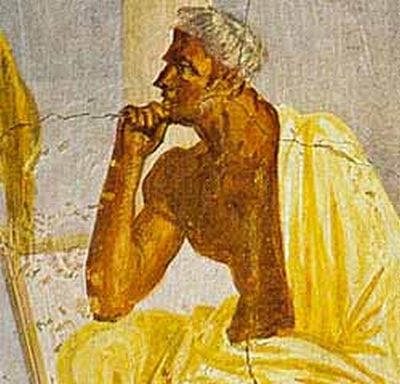 |
| Tibullus, the poet in question on the funeral pyre |
- This is not a religious poem. He points out that the pious and poets die just as dead as the wicked.
- There are a lot of allusions, and I don't think I got them all. I should have done this earlier in the week so I could study it for the allusions and to discover what is really going on, but I have more to translate before class.
| Memnona si mater, mater ploravit Achillem, et tangunt magnas tristia fata deas, flebilis indignos, Elegia, solve capillos! a, nimis ex vero nunc tibi nomen erit! — ille tui vates operis, tua fama, Tibullus ardet in extructo, corpus inane, rogo. ecce, puer Veneris fert eversamque pharetram et fractos arcus et sine luce facem; adspice, demissis ut eat miserabilis alis pectoraque infesta tundat aperta manu! | If his mother lamented Memnon, if his mother lamented Achilles, and the saddened fates touch the great goddesses, tearful Elegy, loosen your unworthy locks of hair! Now, name enough will come to you from truth! This poet of your work, your fame, Tibullus, burns in an empty funeral pyre, an empty body. Behold, the Venus's little boy carries an upturned quiver and broken bows and a torch without light; Look close, you will see how he goes and pounds his bare chest with droopy wings and a troubled hand! |
| excipiunt lacrimas sparsi per colla capilli, oraque singultu concutiente sonant. fratris in Aeneae sic illum funere dicunt egressum tectis, pulcher Iule, tuis; nec minus est confusa Venus moriente Tibullo, quam iuveni rupit cum ferus inguen aper. at sacri vates et divum cura vocamur; sunt etiam qui nos numen habere putent. Scilicet omne sacrum mors inportuna profanat, omnibus obscuras inicit illa manus! quid pater Ismario, quid mater profuit Orpheo? carmine quid victas obstipuisse feras? et Linon in silvis idem pater 'aelinon!' altis dicitur invita concinuisse lyra. adice Maeoniden, a quo ceu fonte perenni vatum Pieriis ora rigantur aquis — | His loose curls scatter his tears around his neck, And his words echo with agitated groans. Thus they say that he at the funeral of his brother Aeneas was marched out from under his roofs, lovely Iulus; No less is Venus confounded by the dying Tibullus, than when a wild boar destroyed the groin of her young man. But we, the sacred poets, are called the special concern of the gods; They are those who consider us to have godliness. Of course, inoportune death profanes everything sacred, her hand strikes the obscure with everything! What did his father Ismarius, what did his mother profit Orpheus? What did it profit Orpheus that the conquered wildings were amazed? And similarly, his father Apollo was said to have celebrated Linon - alas! - in the highest forest with his unwilling lyre. Add to this Homer, from whom, just like an unfailing spring, the mouths of poets are drenched with Pierian water -- |
| hunc quoque summa dies nigro submersit Averno. defugiunt avidos carmina sola rogos; durant, vatis opus, Troiani fama laboris tardaque nocturno tela retexta dolo. sic Nemesis longum, sic Delia nomen habebunt, altera cura recens, altera primus amor. Quid vos sacra iuvant? quid nunc Aegyptia prosunt sistra? quid in vacuo secubuisse toro? cum rapiunt mala fata bonos — ignoscite fasso! — sollicitor nullos esse putare deos. | Indeed here the final day caused Homer to sink into the black Avernus, the river in Hades His songs alone escaped the greedy funeral fires; the work of a poet endures, the fame of Trojan labors and the tardy textile weaving is unravlled in a nightly trick. Thus Nemesis, thus Delia will have long names, the one a recent care, the other his first love. How do sacred things help you? Now how does the Egyptian rattle profit you? What profit is there to you to have slept apart from your lover in an empty bed? When malicious fates seize good men - pardon this confessor! - I am worried that I think that the gods are nothing. |
| vive pius — moriere; pius cole sacra — colentem mors gravis a templis in cava busta trahet; carminibus confide bonis — iacet, ecce, Tibullus: vix manet e toto, parva quod urna capit! | Live pious - and you die; While pious, cultivate sacred things - death drags the cultivator from his solemn temples into an empty tomb; Trust in the good songs - and behold, there Tibullus lies; from the whole, he scarcely remains, a poor part of him the urn captures! |
| tene, sacer vates, flammae rapuere rogales pectoribus pasci nec timuere tuis? aurea sanctorum potuissent templa deorum urere, quae tantum sustinuere nefas! avertit vultus, Erycis quae possidet arces; sunt quoque, qui lacrimas continuisse negant. Sed tamen hoc melius, quam si Phaeacia tellus ignotum vili supposuisset humo. hinc certe madidos fugientis pressit ocellos mater et in cineres ultima dona tulit; hinc soror in partem misera cum matre doloris venit inornatas dilaniata comas, cumque tuis sua iunxerunt Nemesisque priorque oscula nec solos destituere rogos. Delia discedens 'felicius' inquit 'amata sum tibi; vixisti, dum tuus ignis eram.' cui Nemesis 'quid' ait 'tibi sunt mea damna dolori? me tenuit moriens deficiente manu.' Si tamen e nobis aliquid nisi nomen et umbra restat, in Elysia valle Tibullus erit. obvius huic venias hedera iuvenalia cinctus tempora cum Calvo, docte Catulle, tuo; tu quoque, si falsum est temerati crimen amici, sanguinis atque animae prodige Galle tuae. his comes umbra tua est; siqua est modo corporis umbra, auxisti numeros, culte Tibulle, pios. ossa quieta, precor, tuta requiescite in urna, et sit humus cineri non onerosa tuo! | You, sacred poet,pyres of flames take away and do not fear to feed upon your breasts. The flames, which sustain all wickedness, would have been able to burn the golden temples of the sacred gods! She turned away her face, she who possesses the citadels of Eryx; and they are there who refuse to hold back the tears. But nevertheless this is better, than if Phaescian earth had buried you unknown in common dirt. Here, certainly, the mother pressed the little crying eyes of the fleeing and in ashes she gives her final gifts. Here the miserable sister, to share grief with the mother, comes with disordered hair hanging in pieces. And with your female kin Nemesis and Delia unite lips to abandon the lonely pyres. Delia, withdrawing, said " I was better loved by you; you lived while I was yours in the flame." To whom Nemesis said, "Why are my losses a sorrow to you? Dying he held me in his weakening hand." Nevertheless, if from us anything remains except a name and a shadow, Tibullus will be in the Elysian field. Learned Catullus, may you come to meet Tibullus, wreathed with ivy around his youthful brow, with your Calvus. And Gallus, generous with your blood and soul, may you meet him, if the charge of desecrated friendship against is false. Your shade is courteous is polite to these poets: if just any things are a shadow of the body, elegant Tibullus, you augmented pious numbers. Rest your quiet bones and your heart in the safe urn, and let not the earth be a burden to your ashes! |
Subscribe to:
Posts (Atom)